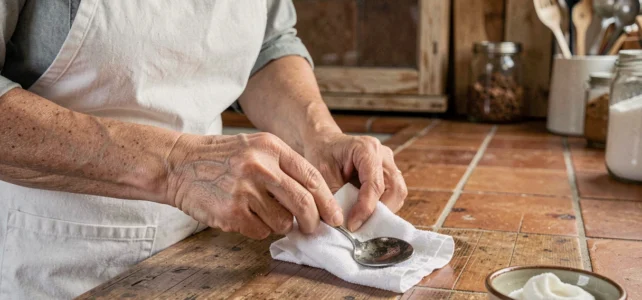
Cleaning tarnished silver seems simple: baking soda, vinegar, aluminum, and you’re done. Most online guides offer the same recipes, applied indiscriminately to a solid silver piece, a plated ring, or a pendant set with turquoise. The problem is that these objects do not react the same way to the same treatments. Understanding what type of silver you are handling radically changes the method to use, and especially the mistakes to avoid.
Solid, plated, or set silver: appropriate methods and risks by type of piece
The tarnishing of silver comes from a chemical reaction between the metal and sulfur compounds present in the air, sweat, or certain cosmetic products. A layer of silver sulfide forms on the surface. On solid silver (925), this layer can be removed by relatively vigorous means without risk to the metal itself.
On plated silver, the situation is different. The layer of silver deposited on a base metal (often copper or brass) is thin. Abrasive cleaning or prolonged immersion in an acidic bath can damage the plating and expose the underlying metal. Silver set with stones poses a third problem: some porous gems (turquoise, opal, pearl) absorb liquids or react to acids.
| Type of silver | Safe methods | Risky methods |
|---|---|---|
| Solid silver (925) | Aluminum + salt + hot water bath, paste of baking soda, diluted white vinegar | No common method poses a major risk |
| Plated silver | Dry microfiber cloth, lukewarm soapy water, immediate drying | Baking soda scrubbing, prolonged soaking, abrasive products |
| Silver set with porous stones | Wet microfiber cloth, localized cleaning with a cotton swab | Complete immersion, vinegar, lemon, aluminum + hot water |
Knowing how to clean tarnished silver first requires identifying the type of piece, otherwise the chosen method may degrade the object instead of restoring it.
Electrochemical aluminum and salt bath: why it works on solid silver
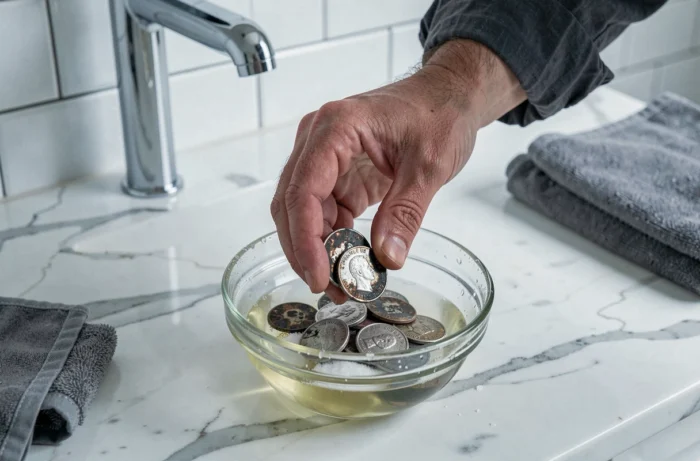
The most effective technique for heavily tarnished solid silver relies on an electrochemical reaction. The principle: place the silver object in direct contact with a sheet of aluminum in a bath of hot water mixed with salt or baking soda. Aluminum, being more reactive than silver, attracts sulfur atoms and detaches them from the surface of the precious metal.
Several factors condition the result:
- The physical contact between the object and the aluminum must be real, not just proximity in the container. For intricately designed pieces (fine chains, engraved cutlery), partially wrapping the object in the foil improves the result.
- The water must be hot but not boiling. A temperature that is too high may weaken the soldering present on some jewelry or silverware.
- The immersion time varies according to the degree of tarnishing: a few minutes are sufficient for light tarnish, about ten for pronounced darkening.
This method does not remove material, unlike mechanical polishing. Solid silver does not lose any thickness during this treatment, making it preferable for antique or valuable items.
Baking soda paste: when to use it and when to abstain
Baking soda mixed with a little water forms a slightly abrasive paste. On solid silver, this gentle abrasion is enough to remove sulfide without scratching the metal. Apply with a soft cloth, rubbing in the direction of the grain (not in circles), then rinse with lukewarm water.
On plated silver, this same paste can wear down the plating after a few repeated cleanings. Avoid any abrasive rubbing on plated silver remains the most protective rule. A simple wipe with a damp microfiber cloth, without product, is sufficient for regular maintenance.
White vinegar and lemon on silver: real effectiveness and limits
Diluted white vinegar and lemon juice work by acid dissolution of silver sulfide. On slightly tarnished solid silver, soaking for a few minutes in pure white vinegar followed by rinsing with clear water yields a satisfactory result.
However, these acids present two concrete limits. The first concerns set stones: porous stones absorb acidity and can discolor irreversibly. Turquoise, lapis lazuli, pearls, and opals should never come into contact with vinegar or lemon.
The second limit affects plated silver. A prolonged acidic bath attacks the thin layer of silver and accelerates its wear. For this type of piece, localized cleaning with a cotton swab soaked in soapy water is more suitable than immersion.
Protecting silver after cleaning to slow tarnishing
Cleaning silver without subsequently protecting the surface amounts to repeating the same work a few weeks later. Ambient air, humidity, and contact with skin immediately restart the formation of sulfide.
Several actions significantly reduce the speed of reoxidation:
- Dry each piece immediately after cleaning with a clean soft cloth. Residual moisture accelerates tarnishing.
- Store jewelry in individual anti-tarnish fabric pouches, or if not available, in an airtight bag containing a small piece of chalk (which absorbs moisture).
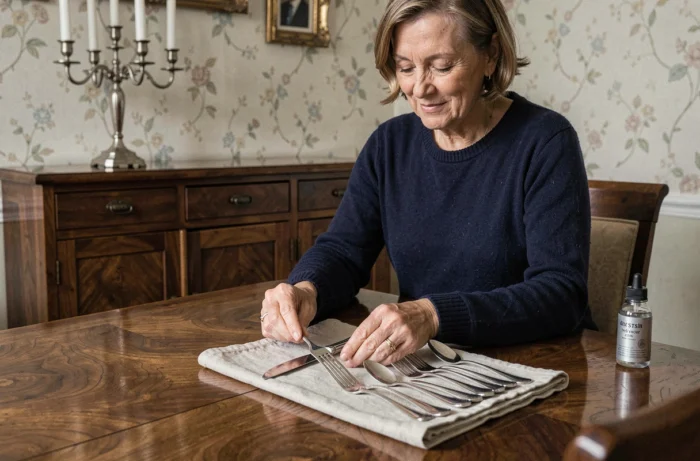
- For exposed silverware, applying a clear protective varnish after polishing creates a barrier against moisture and sulfur compounds. This technique, used in restoration, significantly prolongs the shine between cleanings.
- Regularly passing a dry microfiber cloth over exposed pieces before tarnishing sets in avoids the need for chemical treatments.
Regular maintenance by wiping remains the simplest way to limit aggressive cleanings. A solid silver object handled and wiped each week tarnishes much less quickly than an object stored in an open drawer for months. The choice of cleaning method always depends on the type of piece, and the best strategy remains to reduce the frequency of interventions through appropriate storage.