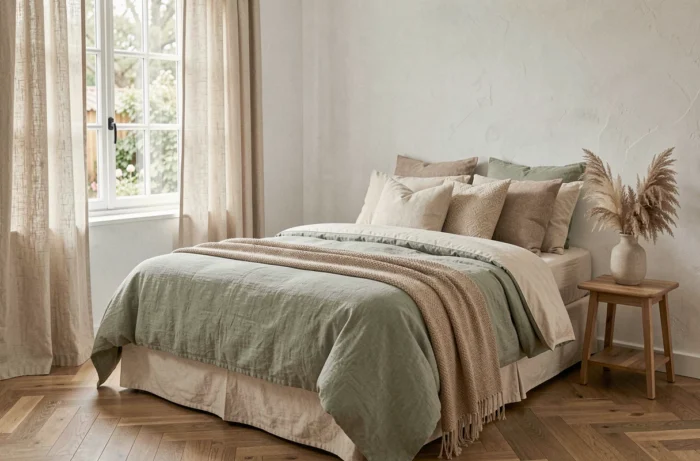
A calming bedroom decor is based on a principle often underestimated: the room should facilitate the transition between wakefulness and sleep. This is not just about choosing a pastel shade or throwing a blanket on the bed. Colors, materials, light management, and even air quality create a coherent whole, where each element influences the comfort experienced.
Circadian light in the bedroom: beyond the warm bulb
Most decor guides recommend warm-toned bulbs to create a subdued atmosphere. This advice remains valid, but it only covers part of the topic. The lighting of a calming bedroom should be considered according to the time of day, not just the color temperature of a bulb.
During the day, allowing as much natural light as possible through the windows helps to set the biological rhythm. International recommendations on indoor lighting advocate for significant light exposure in the morning, followed by a sharp reduction in the hours leading up to bedtime.
In the evening, the goal is to create a gradual descent into darkness. Dimmable fixtures allow for a gradual decrease in light. An adjustable reading lamp near the bed, set to a minimum, is sufficient for reading without overstimulating the brain. Specialists from Joli Rêve offer textile and decorative accessories that contribute to this enveloping atmosphere, from bed linens to cushions.
At night, the bedroom should be as dark as possible. Night lights, the standby LEDs of electronic devices, and street lighting filtering through the windows maintain unwanted light exposure. Covering small LEDs with opaque tape and installing blackout curtains or shutters are simple actions that radically change the quality of rest.
Calming color palette: how to choose without making mistakes
The choice of colors determines the overall atmosphere of the bedroom. Not all so-called “soft” shades produce the same effect, and their rendering depends on the natural light available in the room.
Pale blues and watery greens work well in south or west-facing bedrooms, where natural light is abundant. In a poorly lit room (north-facing, small window), these same shades can turn into dull gray. A warm beige or an off-white leaning towards linen will then be more suitable to maintain a bright and cozy atmosphere.
Testing the color directly on the wall remains the most reliable method. Store samples, observed under standardized artificial lighting, never render exactly the same at home. Applying a sample to a surface of at least thirty square centimeters and observing it at different times of the day avoids unpleasant surprises.
For the ceiling, a shade slightly lighter than the walls gives an impression of height. Painting the ceiling the same color as the walls creates a cocooning effect, suitable for large bedrooms lacking intimacy.
Natural materials and textiles: creating a tactile atmosphere
The decoration of a bedroom is not perceived solely through the eyes. The touch of materials directly influences the feeling of comfort experienced upon entering the room. Raw wood, washed linen, boucle wool, or brushed cotton each bring a different texture.
The layering of textile elements on the bed is the most visible decorative lever. Rather than accumulating cushions symmetrically, varying formats and materials produces a more natural effect:
- A wrinkled linen bed throw, placed diagonally at the foot of the bed, adds volume without overloading
- Two or three cushions of different sizes (a large rectangular one, a square one, a small knitted one) are enough to structure the decor
- A wool or jute rug at the foot of the bed creates a soft transition zone between the cold floor and the resting space
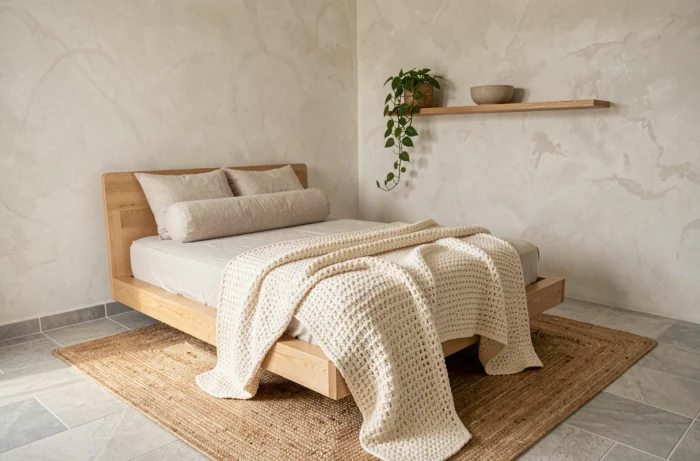
Wood should ideally be introduced in small touches: a solid oak bedside table, a walnut mirror frame, a light pine wall shelf. An excess of wood in the same room can weigh down the atmosphere instead of softening it. Two to three visible wooden elements, combined with smooth surfaces (painted wall, solid-colored linens), are enough to anchor the space in a natural aesthetic.
Air quality and decluttering: the forgotten aspects of a calming bedroom
A bedroom occupied all night accumulates carbon dioxide and humidity. Without air renewal, the atmosphere becomes heavy and can promote the growth of mold, especially on cold walls or behind furniture pressed against exterior walls.
A short and thorough airing is more effective than a window left ajar for hours. Opening the window wide for a few minutes in the morning renews the air without cooling the walls or wasting heating energy. This simple gesture is also an indirect decorative act: healthy air preserves textiles, bed linens, and wall finishes over the long term.
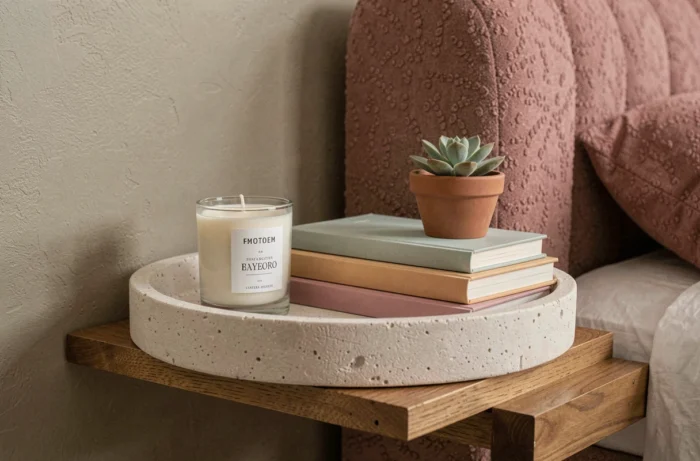
Decluttering, often mentioned in decor guides, deserves clarification. It is not about emptying the room but limiting the objects placed on visible horizontal surfaces. A bedside table with a book, a lamp, and nothing else creates an immediate sense of calm. In contrast, a tray loaded with bottles, cables, and papers creates a visual tension incompatible with rest.
- Favor closed storage (drawers, bed boxes) to hide everything that does not have a decorative function
- Ban visible clothes outside the wardrobe or closet, including the infamous chair that serves as a hanger
- Keep the floor clear around the bed to facilitate movement and enhance the sense of space
A calming bedroom is not a fixed style to be reproduced from a catalog. It is a balance between what the room shows and what it conceals, between the light it lets in and the light it blocks. The final detail that transforms an ordinary space into a true resting place is often the most discreet: fresh air, visual silence, complete darkness at night.