The Yamaha PW80, commonly known as Piwi 80, remains one of the most popular beginner motorcycles in France. Its maximum speed and the legal conditions of its use generate recurring confusion among buyers. This article compares what the motorcycle technically allows and what French law actually permits.
Actual speed of the Piwi 80 and technical framework of the engine
The PW80 is equipped with an 80 cc two-stroke engine. This type of compact and lightweight engine develops a modest nominal power, suitable for children’s sizes. The maximum speed observed in practice is relatively low, consistent with its off-road learning purpose.
This point is central to understanding the rest: despite a limited top speed, the PW80 remains a motorized land vehicle in the sense of the Insurance Code. The torque and power of the engine, even if low, are sufficient to trigger all the legal obligations applicable to any motorized vehicle.
To delve deeper into the regulatory status of this motorcycle, the question of the max speed of the piwi 80 is directly linked to its lack of road approval, a point that many owners underestimate.
Road approval and registration: comparative table of statuses
The distinction between an approved two-wheeler and a non-approved vehicle like the Piwi 80 conditions the entire applicable legal regime. The table below summarizes the concrete differences.
| Criterion | Approved motorcycle (e.g., 80 cc road) | Piwi 80 (non-approved) |
|---|---|---|
| CE approval | Yes | No |
| Registration certificate | Issued by the prefecture | Impossible to obtain |
| Circulation on public roads | Allowed | Prohibited |
| Private land / closed circuit | Allowed | Allowed |
| Liability insurance | Mandatory | Mandatory (even off-road) |
| DICEM declaration | Not applicable | Mandatory for mini-motorcycles |
The Piwi 80 has never received CE approval. Yamaha designed it as a recreational off-road motorcycle. No CE approval means no registration possible, regardless of the condition or equipment of the machine.
In contrast, a motorcycle of the same displacement that has road approval would follow the classic regime: registration certificate, plates, possible technical inspection. The gap between the two statuses has nothing to do with speed or engine power, but solely with compliance with European technical standards.
Insurance for the Piwi 80: the obligation that applies even on private land
This is the most misunderstood legal point. Many owners believe that their Piwi 80 does not need insurance since it does not circulate on public roads. This interpretation is incorrect.
Any motorized land vehicle that is capable of moving must be insured, even if it never leaves private land. The insurance obligation does not depend on the place of use, but on the vehicle’s ability to move. Only a vehicle that is clearly out of order (engine disassembled, wheels removed) is exempt from this rule.
The consequences in case of lack of insurance are identical to those that apply to road motorcycles:
- Significant fixed fine, with the possibility of an increase in case of repeat offenses
- Immediate immobilization or confiscation of the vehicle by law enforcement
- Total personal financial liability in case of bodily injury, without a cap
This obligation also concerns non-approved mini-motorcycles explicitly mentioned in the texts. The “private land only” argument does not constitute a legal exemption to escape liability insurance.
Mini-motorcycle legislation and DICEM declaration: an unknown formality
Mini-motorcycles like the Piwi 80 are subject to a specific declarative regime. The DICEM declaration (identification device for motor cycles) concerns non-approved vehicles equipped with a thermal or electric engine.
This formality remains largely ignored by private buyers. However, it aims to identify vehicles in circulation, including those that do not leave private land. Failing to make this declaration exposes one to an additional penalty in case of inspection.
Conversely, an owner who declares their Piwi 80 and insures it properly can use it legally on private land or on a closed circuit. The legal framework does not prohibit the use of the Piwi 80; it regulates its conditions of use.
Public road and penalties: what a minor risks on a Piwi 80
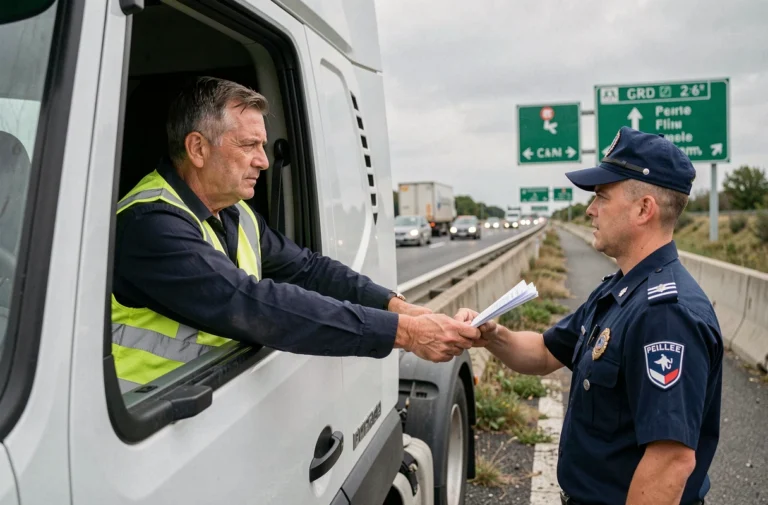
Riding a Piwi 80 on a road, a communal path, or a sidewalk constitutes an offense. Since the vehicle cannot be registered, no exemption exists for a short trip or movement between two private lands.
The responsibility lies with the supervising adult, not the minor. The cumulative penalties include:
- Fine for driving a non-approved vehicle on public roads
- Fine for lack of registration
- Immediate impoundment of the vehicle
- Engagement of civil and criminal liability of the parent or legal guardian
The fact that the driver is a child does not mitigate the seriousness of the offense. Courts systematically hold the adult responsible who authorized or tolerated the circulation.
The legal regime of the Piwi 80 boils down to a simple gap between technical capability and legal authorization. The motorcycle can ride, but French law precisely restricts where and how. Mandatory insurance even in the garage, DICEM declaration, total prohibition on public roads: these three pillars do not change, regardless of the speed displayed on the speedometer.