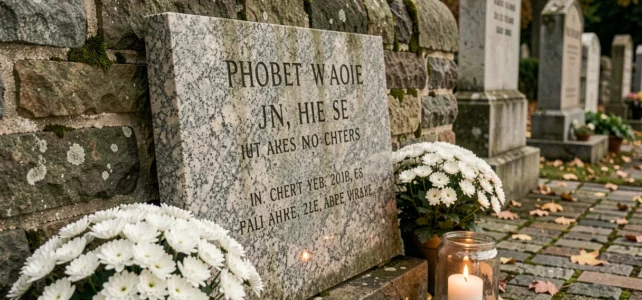
The choice of a message engraved on a personalized gravestone requires precise formulation work. The technical constraints of engraving (number of characters, readability from a distance, weather resistance) influence both the result and the emotional intent. Here are ten concrete formulations, each adapted to a distinct relational or stylistic context.
1. “Forever in our hearts” – the simple and universal phrase
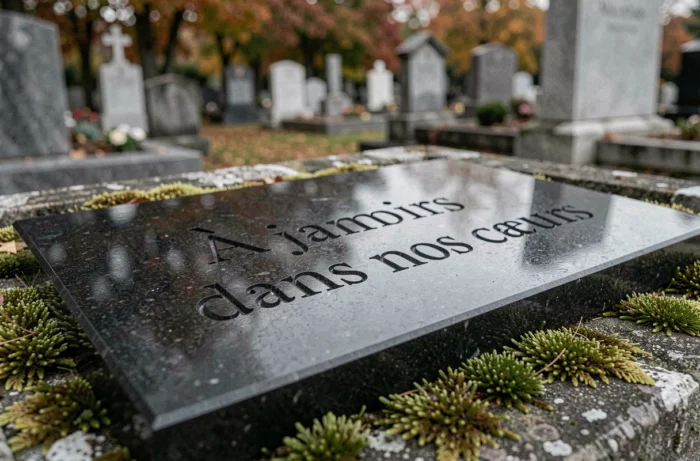
This phrase works because it does not exceed five words. On a granite or marble plaque, brevity ensures a sufficient character size to remain legible after several years of exposure.
We recommend this inscription when several family members wish to collectively sign the tribute. The plural “our” avoids designating a unique kinship link. It is suitable for both a classic grave and a columbarium plaque, where the engraving space is limited.
2. “Your smile still brightens our days” – the memory anchored in daily life
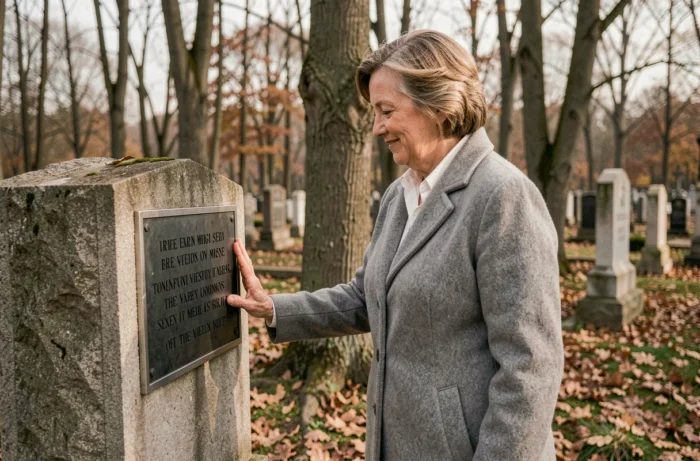
This type of message shifts the tribute from the solemn register to the intimate register. It names a concrete trait of the deceased (the smile), which distinguishes it from a generic phrase.
When looking for message ideas for a gravestone, it is noted that the most striking formulations rely on a physical or behavioral detail specific to the deceased. Adapting “smile” to “laughter,” “voice,” or “gaze” personalizes it further without altering the grammatical structure.
3. “You taught us to love life” – the tribute in the form of gratitude
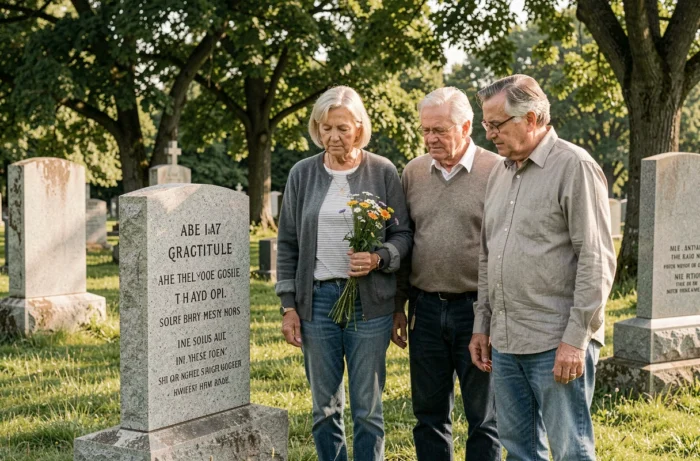
The register of gratitude works particularly well for a parent. The phrase assigns a role to the deceased (the one who taught) and positions the living in a continuity.
Technically, this inscription fits on two lines in standard font. Limiting the message to around ten words remains the rule to maintain a good visual balance on common rectangular formats.
4. “Rest in peace, my eternal love” – the marital declaration
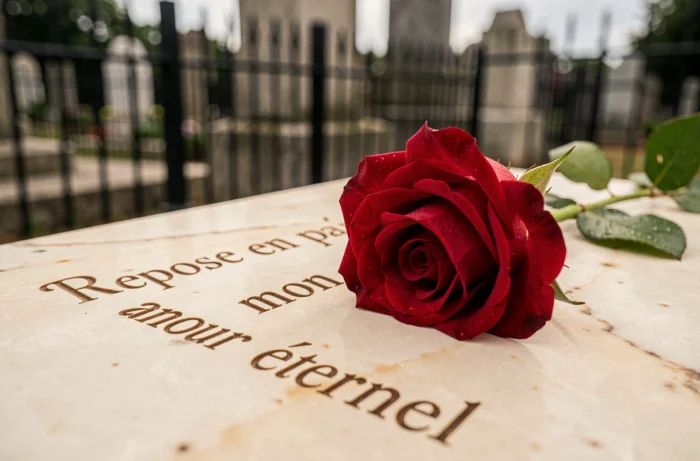
For a husband or wife, the assumed romantic register produces a message that does not confuse with a collective family tribute. The word “love” clearly inscribes the nature of the bond.
Heart-shaped plaques or those with floral patterns lend themselves well to this register. We observe that families sometimes hesitate to use such a direct tone on a grave. The engraved marital message asserts the bond unambiguously, helping visitors understand the relationship.
5. “Time passes, memory remains” – the revisited proverb
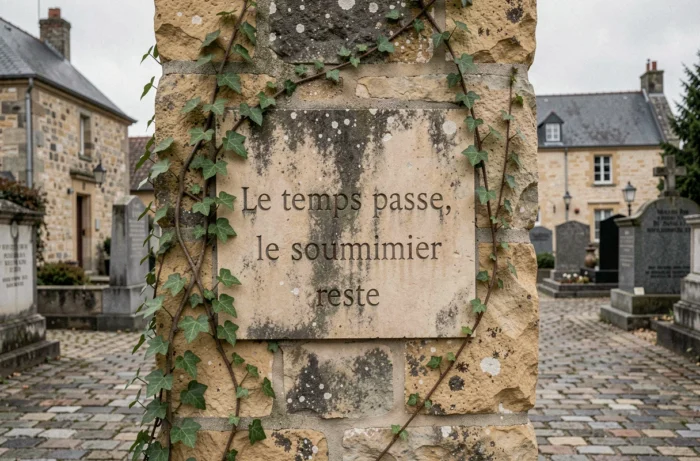
Proverbial phrases offer a recognizable framework. This one contrasts two temporalities in a single sentence, giving it a pleasant binary rhythm to read.
The advantage of an adapted proverb is that it does not require a signature. It can complement the identifying information (name, first name, dates) without overloading the plaque. On light stone gravestones, the engraved phrase in relief ages better than a long text.
6. “God called you back, we keep you in our hearts” – the spiritual dimension
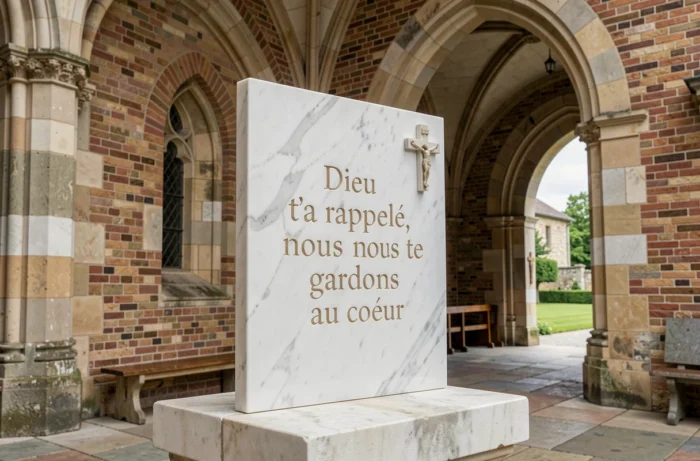
The religious register remains highly sought after. This formulation associates faith (God, guardian angel) with the attachment of loved ones, avoiding an exclusively liturgical tone.
For believing families, other variants work:
- “In God’s hands, forever in our prayers” – suitable for plaques with a cross or religious motif
- “An angel watches over us from heaven” – gentle register, often chosen for a child or young adult
- “May the Lord welcome you into His light” – formulation close to Catholic liturgy
7. “Little angel gone too soon” – the message for a child
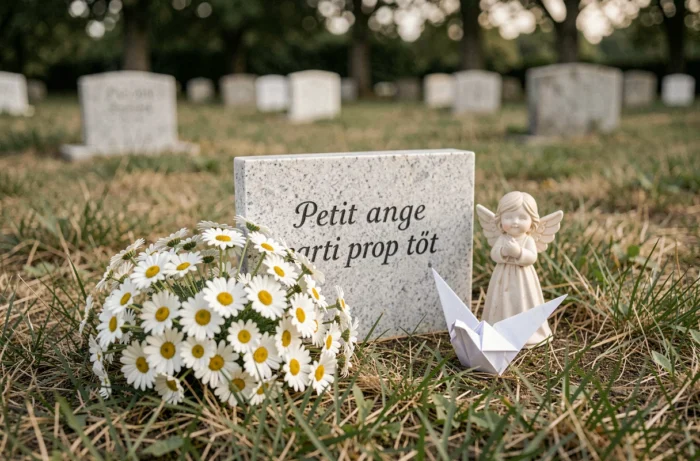
The loss of a child calls for a specific register. The word “angel” appears in the majority of inscriptions intended for the youngest, and engravers offer associated motifs (stars, stuffed animals, butterflies).
The challenge here lies in conciseness. A message that is too long on a small plaque becomes illegible. Three to six words are sufficient for a child’s plaque. Formulations like “Our star shines up there” or “Your laughter still resonates” provide alternatives to the angelic register.
8. “To my brother, my friend, my guide” – the fraternal bond in triptych
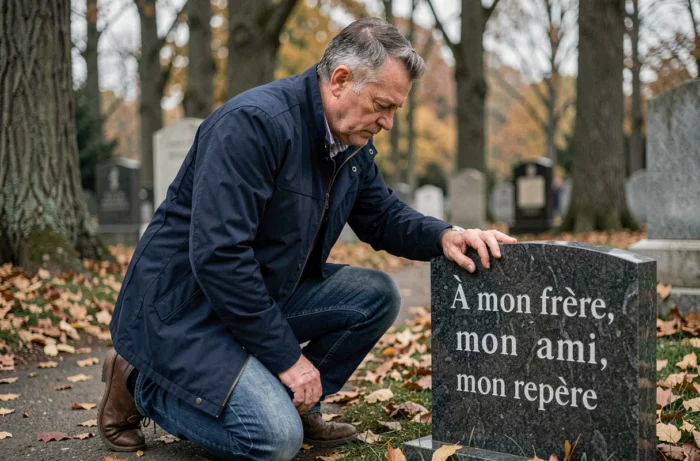
The structure in three terms creates a rhythm that engraves well. Each word specifies a facet of the bond: kinship, complicity, stability. This format also works for a sister (“To my sister, my confidante, my star”).
The triptych allows for personalization without writing a long text. It adapts to all plaque formats and remains legible even in small characters. We recommend choosing three words that do not overlap to avoid redundancy.
9. “Your words still carry me” – the personal quote of the deceased
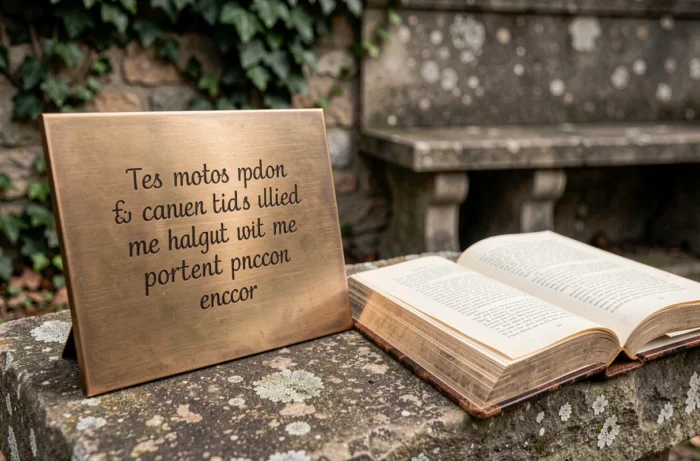
Engraving a phrase that the deceased often said represents the highest degree of personalization. No catalog will offer this formulation, as it belongs to the family history.
This approach requires prior exchange with the engraver to ensure that the phrase fits in the available space. A personalized text rarely exceeds fifteen words on standard formats. If the original quote is longer, it is better to extract the most evocative segment.
10. “1948-2025 – A life of passion and generosity” – the summary of a journey
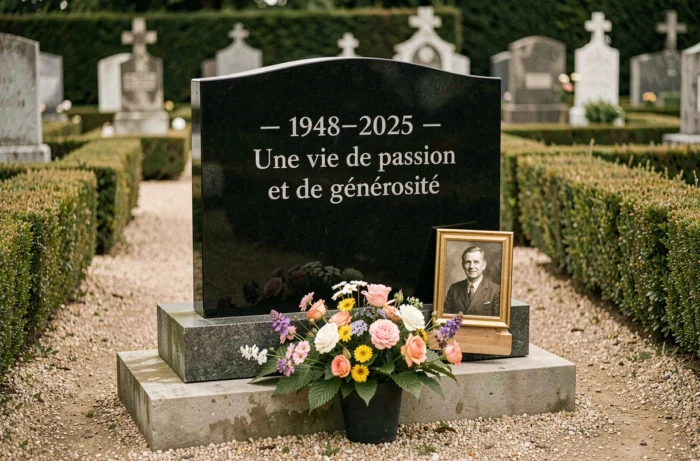
Associating dates with a life qualifier transforms identifying information into a tribute. The words “passion” and “generosity” say something about the deceased without going into biographical detail.
This format is suitable when the family wants the plaque to speak for itself to visitors who did not know the deceased. Choosing two or three common nouns summarizing the personality (courage, kindness, humor) is enough to give depth to the engraved memory.
The text of a personalized gravestone is determined as much by what is kept as by what is removed. A five-word formula well chosen will carry further than a paragraph diluted by emotion. The material, the size of the plaque, and the installation location (grave, columbarium, niche) remain the first parameters to validate before finalizing the words.