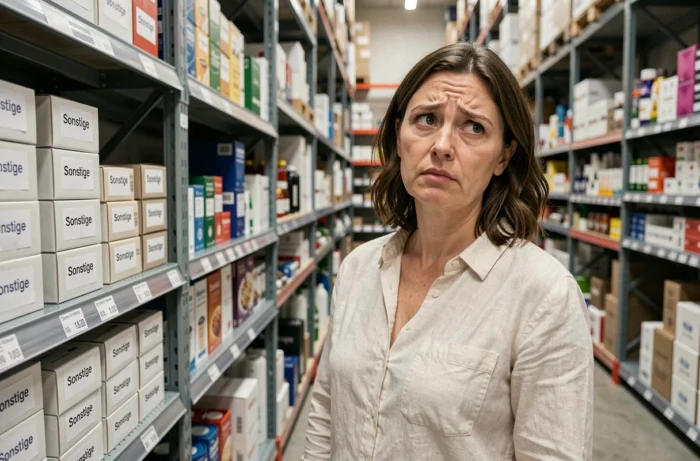
On marketplaces and in spare parts databases, the word “Sonstige” appears as a brand name in its own right. A wide variety of product listings, ranging from childcare accessories to industrial components, carry this label.
Yet the term is simply a German word meaning “other” or “miscellaneous”, used as a default value in German-language catalogs. Its migration to French platforms makes listings harder to interpret and raises practical traceability questions for buyers.
Sonstige in catalogs: a data problem, not a manufacturer
The natural instinct is to look for a registered office, an official website or a history behind the name Sonstige. The search comes up short: no commercial entity manufactures products under this name. The word serves as a classification value in German and Austrian product information management (PIM) systems, where the “brand” field must be filled in.
When a supplier does not provide a product’s brand, the system automatically enters “Sonstige” or “Sonstiges” as a placeholder. The same mechanism exists in other languages, with equivalents such as “Other” or “Misc.”, but the German version is the one that has spread most widely into French-language catalogs.
This is due to the volume of imports. Data feeds between German wholesalers and European marketplaces often pass through without thorough linguistic processing. Automatically translated fields retain “Sonstige” as is, and platform algorithms then treat it as a legitimate brand name. To learn about the Sonstige brand in practice, you therefore need to think in terms of catalog data quality rather than industrial strategy.
Products labeled Sonstige: what the product listing doesn’t tell you
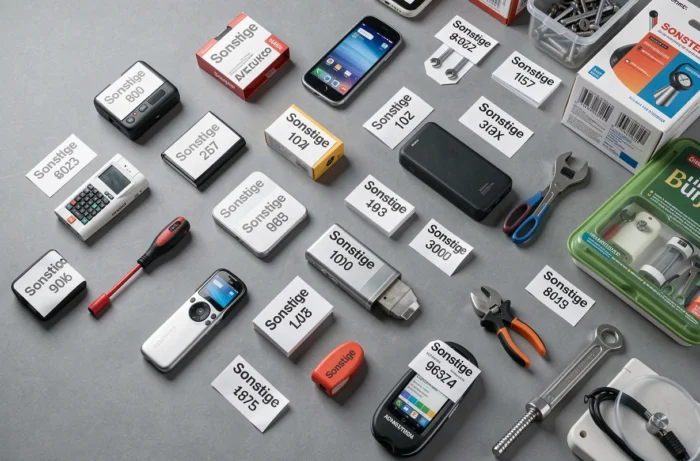
The Sonstige label groups together products with nothing in common—not their manufacturer, product range or quality level. On the same platform, this label might appear on a pack of stainless steel screws, a phone case and a child car seat. Their only common feature is the lack of reliable information about the actual manufacturer.
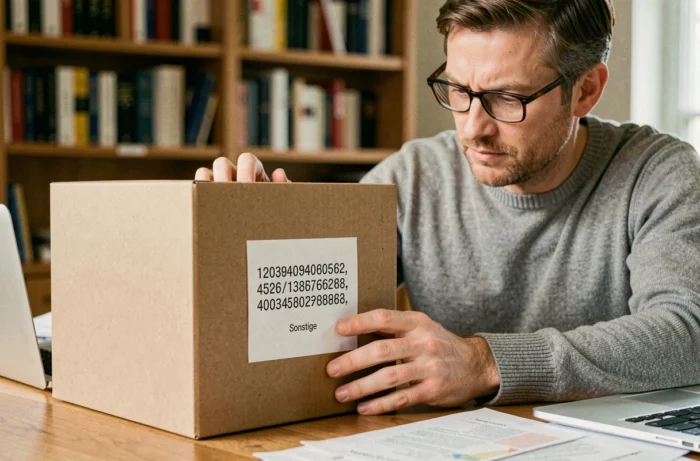
This lack of transparency creates a practical problem when making a purchase. Without knowing the manufacturer, it is difficult to assess whether a product complies with regulations, check whether after-sales service is available or claim under a warranty. A product listing may show technical specifications, but buyers have no way to verify them against the commitments of an identified manufacturer.
What to check on a Sonstige product listing
- The third-party seller: their country of operation, reviews and time on the platform tell you more than the “brand” field
- Photos and descriptions: a listing written in poor French, with generic images or specifications copied from another product, points to careless cataloging
- Displayed certifications: a CE mark or a cited standard (EN 1888 for strollers, for example) should be verifiable with the seller, who is required to provide the relevant documentation
- The EAN or GTIN number: when available, it can help identify the actual manufacturer through public databases such as Open Food Facts or GS1 registries
European product safety regulations and generic labels
The General Product Safety Regulation (EU) 2023/988, applicable since December 13, 2024, strengthens traceability requirements for all consumer products sold in the European Union. The regulation does not specifically target pseudo-brands such as Sonstige, but its provisions make them more problematic than before.
Article 19 of the regulation requires online offers to display information about the manufacturer, product identification and, where required, the responsible person in the EU, as well as safety warnings. A “brand” field filled in with “Sonstige” does not meet any of these requirements.
For professional buyers (resellers, assemblers and maintenance providers), this means that a product labeled Sonstige in a supplier catalog requires additional verification before it can be placed on the market. The responsibility of the economic operator marketing the product in the EU is not removed by the absence of an identifiable brand in the original database.
What the regulation changes for marketplaces
Online platforms must now ensure that minimum safety information is available before a listing is published. In practice, enforcement remains uneven. Some marketplaces are beginning to filter listings whose brand field contains generic values. Others allow these labels through unchecked, leaving consumers uncertain.
Sonstige on Amazon, Cdiscount and specialist websites: different realities
The context in which Sonstige appears varies by platform type. On Amazon, the label is mainly found on low-priced items imported through automated data feeds. The number of Sonstige listings varies by category, with electronic accessories, small hardware items and fashion products most affected.
On specialist industrial or agricultural spare parts websites, Sonstige serves a different purpose. It often indicates a compatible component made by an unidentified subcontractor and sold as a low-cost alternative to the original part. The risk is not the same when buying a USB cable as when buying a hydraulic seal.
On Cdiscount and Vinted, Sonstige is more often the result of an entry error by an individual or professional seller. The platform does not always require the brand field to be validated, so the German word persists in listings through inertia.
- On general marketplaces: Sonstige is a sign of automated cataloging, rarely a deliberate choice by the seller
- In B2B catalogs: it indicates an unbranded product, often a generic equivalent of a replacement part
- On resale platforms: it points to an incorrectly completed form or an uncorrected automatic translation
The Sonstige label is neither an organized scam nor a brand in its own right. It stems from a structural flaw in product data management across Europe. The solution is the same regardless of where you shop: ignore the brand field when it displays a generic value, and focus your checks on the seller, documented certifications and the actual manufacturer’s identity.