In France, most tenants are not allowed to repaint a load-bearing wall or drill into a partition without the landlord’s written consent. This legal restriction, included in most residential leases, directly shapes interior design choices for a significant proportion of the population.
At the same time, the furniture reuse market is taking shape, with dedicated refurbishment channels, while Ameublement français’s 2025–2030 industry guidelines highlight repairability and ease of disassembly from the design stage. These developments are changing how living spaces can be personalised in practical terms.
Rental home decor: personalise your space without permanent alterations
Transforming a rented home means working within certain constraints. Standard leases prohibit structural changes, and the move-out inspection can penalise any damage. Even so, tenants can express their style without altering the property itself.
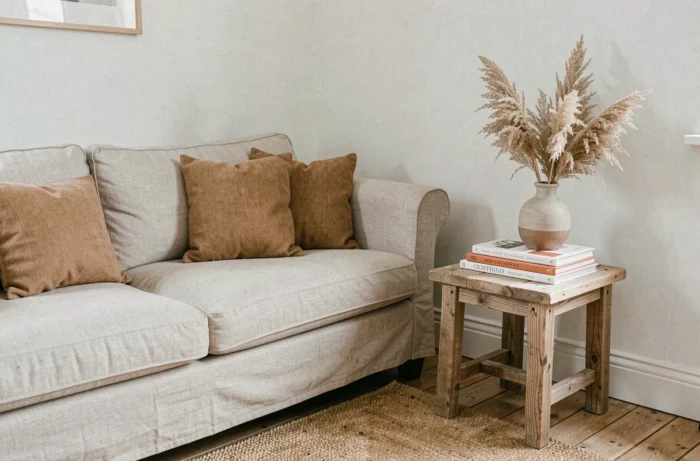
Textiles are the most straightforward option. Curtains, cushions, throws and rugs can completely change the feel of a room without leaving a mark. A large rug in the living room is enough to redefine the living area, absorb noise and introduce colours that are missing from the original walls.
Items that can be installed without drilling offer another solution. Adhesive picture rails, freestanding shelves and rail-mounted frames make it possible to create a gallery wall that can move with you. The home decor guides on Habitat Guides cover this kind of reversible setup, which works in most rental properties.
Lighting also plays a role that is often underestimated. Replacing a standard ceiling light with a compatible pendant fitting (without modifying the electrical wiring) or adding several lamps can change the feel of an entire space. Indirect lighting softens an interior without any work on the walls.
Reused furniture and modular design: furniture that moves with you
Furniture reuse now extends beyond second-hand shops. Specialist channels refurbish sofas, chests of drawers and tables before reselling them, with checks on their structural condition. This meets two needs: reducing furnishing costs and cutting furniture waste.
Ameublement français’s 2025–2030 industry guidelines take this approach further by incorporating ease of disassembly from the design stage. Furniture designed to be easily taken apart, transported and reassembled is better suited to a mobile lifestyle. If you want sustainable interior design, this is worth checking before you buy.
- A sofa with removable legs and armrests can fit through a narrow staircase and withstand several moves without being damaged.
- A modular shelving unit made up of separate cubes can be adjusted to the ceiling height of each new home.
- An extendable table can go from seating two for everyday meals to seating six, without the need for extra furniture.
Modular furniture retains its practical value across several successive homes. That makes it an economic as well as an aesthetic choice.
Colours and materials: create a cohesive palette, room by room
A cohesive interior depends less on the number of objects than on the visual connections between them. Working with a colour palette, even a limited one, avoids a “catalogue” effect where every piece of furniture seems to belong to a different world.
One practical approach is to choose three shades: a neutral base for large surfaces (existing walls, sofa), a secondary colour for occasional furniture and textiles, and a third accent shade for decorative objects. A maximum of three colours per room is enough to create a clear, cohesive feel.
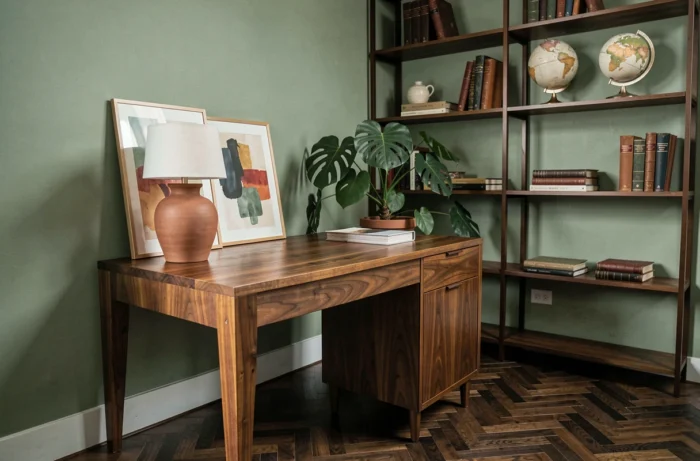
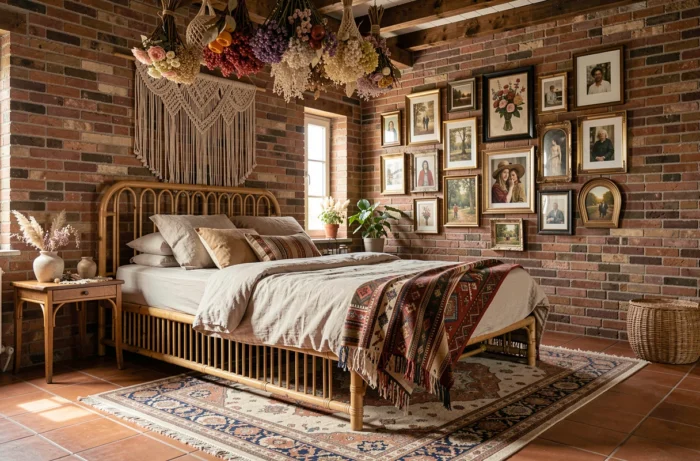
Natural materials such as wood, linen, rattan and ceramic add varied textures without making a room feel cluttered. A living room that combines a fabric sofa, a wooden coffee table and a rattan light fixture gains visual depth through contrasting materials, not through accumulation.
In small spaces, this rule matters even more. A modestly sized studio feels larger when the palette is understated and storage is kept behind closed doors. Light, matte materials reflect light without creating distracting glare.
Interior design and energy efficiency: a connection worth considering
One aspect rarely covered in home decor guides is a property’s energy performance. The DPE (energy performance certificate) now determines whether certain properties can be rented out. For landlords, interior renovations may also involve insulation.
Thick thermal curtains reduce heat loss through windows and serve both a decorative and an energy-saving purpose. Similarly, a dense rug on a cold tiled floor improves comfort without requiring floor insulation work.
Tenants in poorly rated properties should check the latest DPE rating before investing in furnishings. A recent change to the DPE calculation method may alter the rating of some homes without any renovation work. This can affect the long-term viability of the lease and, in turn, whether it makes sense to invest in decorating a particular space.
Find your decor style without copying a look
Visual platforms such as Pinterest and Instagram offer so many images that they can be as overwhelming as they are inspiring. The main risk is trying to recreate a photographed look in a home with a very different architectural context.
A more reliable approach is to identify recurring elements in your own preferences rather than copy an entire interior. If your saved images consistently feature light wood, clean lines and few visible objects, you have found a common thread: a minimalist Scandinavian or Japandi style.
- Gather around twenty images you like and note the three recurring materials, two colours and typical level of clutter.
- Check that these recurring elements suit your current home (natural light, floor area and existing finishes).
- Start with the main living area before carrying the style through to the other rooms.
Personal style is revealed through recurring choices, not a single image. A living room that reflects the choices you have made over time will always have more character than one recreated from a photograph.
The most successful interiors often combine objects collected over the years with a few carefully chosen pieces. A vintage find, a textile brought back from a trip, a second-hand light fixture: these items tell a story that catalogues cannot offer.