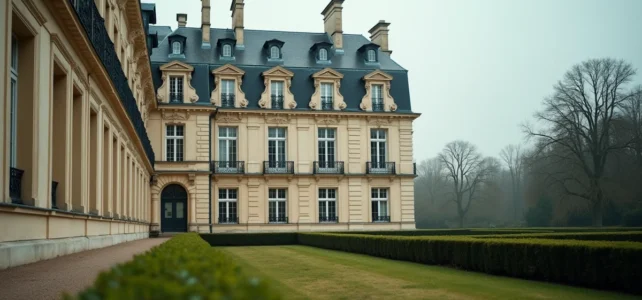
The Château de Groussay, located in Montfort-l’Amaury in the Yvelines, has been classified as a historical monument since 1993. Identifying its current owner involves untangling several layers of transmission, some of which have involved financially contested arrangements in court. This estate, built starting in 1815 for the Duchess of Charost and later transformed by the aesthete Charles de Beistegui in the 20th century, has changed hands under circumstances that shed light on both French heritage history and international asset laundering circuits.
SCI Château de Groussay: legal structure and transmission of the estate
According to public data referenced by Wikipedia, the current owner is registered as a SCI Château de Groussay. This real estate civil company is the legal vehicle that holds the estate. The SCI structure is common for large classified properties: it allows for the separation of asset management from the individual, facilitates transmission, and pools the costs related to the maintenance of a historical monument.
What distinguishes Groussay is the chaotic history of this SCI. After the death of Charles de Beistegui in 1970, the estate underwent several transfers. The most controversial remains the one that brought the château into the orbit of companies linked to Gulnara Karimova, daughter of the former president of Uzbekistan, Islam Karimov.
To trace the precise identity of the owner of the Château de Groussay, it is necessary to distinguish the legal entity (the SCI) from the individual who holds the shares, and to understand the judicial episodes that have marked this property.
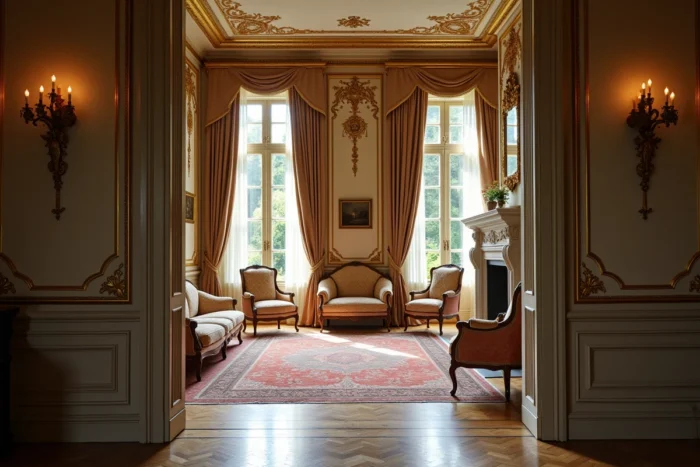
Karimova case and funds of dubious origin: the château under sequestration
The Château de Groussay was acquired through financial arrangements that are now being questioned for money laundering and embezzlement. French and international judicial investigations have established that Gulnara Karimova used shell companies to purchase several properties in France, including this estate in the Yvelines.
The Uzbek state has claimed the confiscation of numerous assets abroad, considered to have been acquired fraudulently. The Château de Groussay is included in this bundle of contested assets.
| Period | Owner / Holder | Context |
|---|---|---|
| 1815 – late 19th century | Duchess of Charost (initial construction) | Country house, initial expansions |
| 1930s – 1970 | Charles de Beistegui | Major transformation, creation of garden structures and theater |
| After 1970 | Heirs then successive transfers | Sale of furniture, partial dispersion of the estate |
| 2000s – 2010 | Companies linked to Gulnara Karimova | Acquisition through contested financial arrangements |
| Recent period | SCI Château de Groussay (French patron) | Repurchase after judicial troubles, cultural vocation |
This table summarizes the major phases of ownership. The “context” column shows that each transfer corresponds to a shift, whether aesthetic, hereditary, or judicial.
International confiscation procedures
The confiscation procedures initiated by Uzbekistan have impacted the transfer of the estate. As long as the legal status of the assets linked to Karimova was not clarified, any transaction on the château remained under scrutiny. This type of international litigation, combining criminal law, real estate law, and judicial cooperation between states, can block a classified property for several years.
The resolution of this situation allowed for the repurchase by a French patron, whose personal identity remains discreet behind the SCI.
Groussay today: residence for artists and living heritage in the Yvelines
The estate is no longer just a private residence. Recent municipal communications mention a residence for artists at Groussay, indicating that the current owner is steering the location towards a structured cultural vocation. This choice contrasts with the strictly private use that Beistegui made of it or with the opaque period linked to shell companies.
The park and garden structures, designed by Beistegui between the 1930s and 1970, constitute a rare ensemble in Île-de-France. Among them are a Chinese pagoda, a Tartar tent, and a private theater. These elements, protected as historical monuments, impose strict conservation obligations on the owner.
- The historical monument classification of 1993 covers the château, its outbuildings, and the landscaped park, which regulates any architectural modification
- The maintenance of such a classified estate in the Yvelines involves partnerships with state services (DRAC, architect of the Buildings of France)
- The transformation into an open cultural space (residencies, events) allows for the justification of certain public aids related to heritage
This cultural orientation distinguishes Groussay from many private châteaux in Île-de-France that remain closed to the public or limit themselves to event rentals.
Charles de Beistegui and the aesthetic legacy of the Château de Groussay
Understanding the current estate requires measuring the imprint of Charles de Beistegui (1895-1970). Born Carlos de Beistegui, this Franco-Spanish aesthete dedicated several decades to transforming a neoclassical country house into a decorative manifesto. He combined a Venetian fireplace with tapestries woven after Goya’s designs, without concern for stylistic coherence in the academic sense.
The structures in the park, built between the 1950s and 1970, are part of a rare architectural program for the time. Beistegui did not restore an old heritage: he created one from scratch, inspired by his travels and collections. This approach explains why the estate was classified as a historical monument as early as 1993, barely two decades after his death.
Upon his passing, an auction dispersed part of the furniture. The château then lost a layer of its identity. The current owner, by steering the place towards artistic creation, reconnects with the idea of a living estate rather than one frozen in commemoration.
The Château de Groussay remains an atypical case in French heritage: a classified property whose transmission intersected with an international corruption case, before regaining a cultural function supported by a discreet patron. The SCI that holds the estate ensures legal continuity, while the vocation of an artist residence outlines a future less opaque than the previous decade.